An interview with Nina Murray | “The art of witnessing”
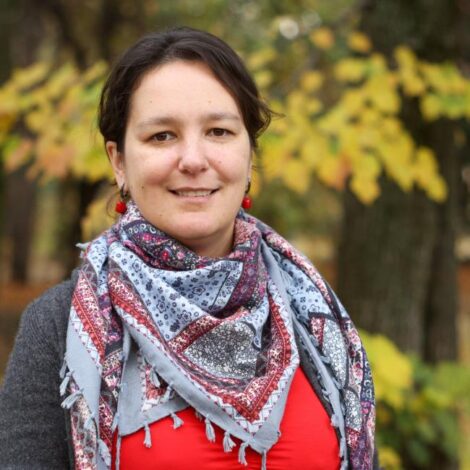
Sean Patterson: You have had an incredibly varied career, from your work as a diplomat to your work as a celebrated Ukrainian poet and translator. Can you begin by telling us a bit about your personal history, from your beginnings in Lviv to your work now in Washington?
Nina Murray: I was born and raised in Lviv, and in my fourth year of university, I received an undergraduate scholarship to study in the United States courtesy of the State Department. This was a very long time ago, and it felt kind of like going to the moon, but I accepted the stipend and was placed at the University of Nebraska, Lincoln. I met my future husband in Nebraska, but I went back to Lviv to finish my first master’s degree in English language instruction and English literature.
I completed a second master’s in creative writing. I worked on my creative writing while teaching as an adjunct at colleges, and it was during this period that I started translating. Even though I was in a creative writing program, my English wasn’t quite good enough yet to write in English, so I proposed a translation thesis. My thesis concerned Yuri Andrukhovych’s set of poems called “Letters to Ukraine”, written while he was in Moscow in the 1990s. We lived in this little house, and at one point I printed out all the letters and taped them to the basement walls, so I could look at each one. That’s what started me on my translation path.
My husband having been a Fulbrighter, he received emails from the State Department about alumni opportunities. One of them encouraged him to take the Foreign Service test. He didn’t want to, but I said I would, because I’m a compulsive test taker. I passed and was eventually chosen for a final in-person interview. By that point, it was too late to fail, somehow, and I was offered the job and received orders to move to Washington.
Our first tour was in Lithuania, and I spent a year learning Lithuanian to prepare for that assignment. I had a wonderful tour in Vilnius. It’s a small country with a small embassy. Technically, I was the cultural attaché, but we were frequently short-staffed, so I ended up also doing press work.
After that, I was sent to Toronto for my consular tour, which manages visas and services for American citizens. The northern border is very busy. Something is always happening, and people are constantly getting lost and driving into Canada by mistake. Serving on the border has its own kind of dynamic, because you see the networks, all the trade going back and forth, the travel, the families, and just how integrated everything is.
When I was in Toronto, I had started writing regularly on Saturdays to decompress from the week, and I wrote a collection of poems that included pieces about fake passports and ghosts at border crossings. They were very much inspired by the environment I found myself in. These poems became my first published book, “Minimize Considered”.
Next, I was sent to Moscow because I had entered the service based on my knowledge of the Russian language, which obligated me to serve a certain number of years in a Russian-speaking country. I was in Moscow just after Russia had annexed Crimea, which was already a very tense time. I continued to write there and leaned on poetry as a way of maintaining my mental health. My writings from this period also found a publisher and were released just before the COVID pandemic. Then I worked in a unit at the State Department that manages arts exchanges. Of course, during the pandemic, you couldn’t go to a theatre or any events. It was terrible for people in the creative industries, and we were all figuring out how to pivot to online events.
My husband got a job in the UK, and for various reasons I couldn’t be assigned there, so I decided to take unpaid leave. At the time, I thought, what am I going to do with myself, so I put out feelers to the community, saying that I would be translating full-time. I ended up having projects lined up for several years, as far as I could see. It was in the UK that I got the taste of being a full-time translator and writer.
This was when Russia’s full-scale invasion of Ukraine happened. Interpreters were needed, and I had an opportunity to return to Ukraine. I became the coordinator for the PEPFAR (President’s Emergency Plan for AIDS Relief) program for a year, in 2023–24. It is very intense work because you are working with a healthcare system in a country that struggles to fund anything, so you end up working closely with international donors.
After my time in Ukraine, we returned to the United States, where I saw that Razom was advertising for a director of their Connect program. I thought that it made perfect sense for me to step out of the State Department and take the opportunity to switch to the non-profit world and work more for Ukrainian culture.
Patterson: Could you describe Razom’s Connect program and your role as its director? What are the program goals, and what kind of work does it do?
Murray: From a high-level perspective, our goal is to make Ukrainian culture more globally present and visible. Specifically, we aim to make the Ukrainian perspective or way of seeing and doing things more present in the American imagination. I say American because Razom is a New York-based NGO, and we do most of our work in the United States. It is not only about promoting Ukrainian culture but also about establishing a relationship between Ukrainian culture and audiences who did not already have a pre-existing relationship.
I emphasize the word “relationship” because we are looking to create mutual understanding, meaning we want to see audiences outside of Ukraine being affected by their encounters with Ukrainian arts and culture as much as we seek to affect Ukrainian artists and creatives with the experiences, practices, and views that exist in North America. We want to help our Ukrainian artists understand how their work lands with American audiences and how it fits into conversations happening here. We create transformative encounters with Ukrainian art, foster institutional relationships, and present Ukrainian culture as a source of inspiration and insight. We are not seeking just eyeballs for the sake of audience numbers. We are seeking relationships, and that makes all the difference in the world because it requires thinking, planning, and strategizing.
It is obvious to anyone working in the field that Russian culture is extremely prevalent. That prevalence has been rightly critiqued and challenged, but the institutional structures invested in it have been built up over a very long time. Museums have collections of artists labelled as “Russian” who may or may not actually be Russian, and works by “Russian composers” are embedded in the standard repertoires of orchestras and performing arts organizations. Many Slavic academic programs are also anchored in the study of the Russian language, from the Russian perspective.
This is another question that has emerged more recently. Russian is spoken not only by ethnic Russians, and these other perspectives also deserve to be seen, heard, and represented. However, we at Razom are focused on promoting Ukrainian art and Ukrainian ways of seeing the world that are relatable to people who don’t live in Ukraine or can’t go there at the moment, for obvious reasons.
Patterson: Since Russia’s full-scale invasion, have you found that perceptions and interaction with Ukrainian arts and culture have changed?
Murray: I see them moving in the right direction. When the full-scale invasion happened, there was a sudden surge of interest in everything Ukrainian. Ukraine was suddenly on the world’s mental map, where it had never been before. That was great, but then we had to reflect on what this means for Ukraine. For Razom, it meant an influx of funding for its humanitarian mission, which made a big difference in the first couple of years of the war.
However, that initial surge of interest has somewhat subsided now. What is interesting to me, though, is that during this process quite a few people became professionally engaged with Ukraine and remain so. Many of those who worked on the ground have their own online communities now. There are many such pockets of interest in Ukraine, but they all struggle to communicate their experience of Ukraine to others who have not had any. That is where the Connect program has a role to play, I think, by helping people who may not have all the necessary tools to convey their story to the world. We can bring people together to feature a Ukrainian artist’s film, exhibit, or play.
For example, we just finished our Ukrainian culture festival in New York. By our rough estimates, about three-quarters of the audience was non-Ukrainian, and this is exactly what we are trying to achieve with Connect. Of course, some of the attendees were of Ukrainian descent, with their non-Ukrainian friends tagging along. Still, we also had many people who were genuinely looking for a play to see that night and came to our production of Lesia Ukrainka’s Cassandra or a Ukrainian artist’s gallery opening. This is very encouraging. Many of our artists have Q&A periods with the audience, and the feedback we are receiving is that these are moments that are really centred on human connection. The discussions are not necessarily about the great geopolitical questions of the day, but rather about how you speak to your child about the war and issues like this that are more relationship-centred.
Patterson: Recently, you translated Serhiy Zhadan’s play A Harvest Truce into English, which was performed at the University of Alberta. What drew you to that particular work of Zhadan, and what message do you hope is communicated to non-Ukrainian audiences?
Murray: Zhadan is such a fascinating figure and is massively famous in Ukraine. He even has a band—he recites his poetry accompanied by music, and they fill stadiums. His importance as a cultural figure is indisputable. I was mostly familiar with his poetry because of my background. I’ve been aware of his fiction as well, of course, but working on fiction can be very intimidating. These projects can take months or years and be extremely intense.
I had previously translated Cassandra, which was picked up by the Harvard Ukrainian Research Institute’s publishing program. They had their eye on translating and publishing A Harvest Truce, so they asked me if I wanted to do the project. After reading the play, I happily accepted the offer and really enjoyed translating it.
It is a very contained story, told from the inside of a house that nobody ever quite leaves. There are many interpretations of what this means, but to me, it conveys a message of home and being rooted in a place, to such an extent that even when terrible things are happening, leaving is inconceivable. I was struck by the characters’ complexities and their different perspectives. The story raises questions about why you should leave your home and what forces weigh on that decision. What is the merit of leaving, and could it be a problematic choice? To me, it is a universal human story that plays out in so many places with so many characters. It is not hard to imagine it happening somewhere else, or the play being staged and interpreted with a different backdrop. This universality is what attracted me to the play.
Patterson: The arts are not only a mirror of society but also a space for social dissent and self-criticism. Even in peacetime, social critique can be controversial and face backlash. Wartime compounds these complexities. Ukrainians have shown themselves uniquely fearless in criticizing their own government, as with the most recent corruption scandal, even in the face of Russia’s invasion. This shows the depth of Ukraine’s democratic spirit, but what do you see as the role of Ukrainian art for self-critical protest today? More broadly, where do you think the line is between constructive criticism and criticism that may serve forces hostile to Ukraine?
Murray: I’ll start with the question of hostile forces. It’s very much the Kremlin’s playbook to amplify any disagreement within any given society. I recently read a research paper about Russian disinformation campaigns that target people who speak Russian and live outside of Russia. The fulcrum of that influence is dissatisfaction. It might be dissatisfaction with the healthcare system or suspicion of some institution or group. Here in the United States, for example, it’s the anti-vaccination movement—there’s documented evidence that the Kremlin funds efforts to amplify those messages in order to create dissent.
The overall goal is to create chaos and an environment in which no one can operate. It’s not so much about achieving a specific outcome or elevating one particular position; it’s about making the entire space ungovernable, and they’re unfortunately quite successful at that. Social discontent can always be weaponized.
Ukrainians are increasingly aware of this, particularly since 2014. I remember watching the invasion of Crimea live from Vilnius. At the time, we were following press and Twitter feeds, and you could literally see the information operations unfolding in real time as the bots kicked in. One thing I’d emphasize is that there is now a great deal of experience in recognizing and understanding these operations, more than ever before.
For Ukrainian creators, the stakes have always been high. Statehood is at stake, nationhood is at stake, the language is at stake, and freedom of expression is at stake. There have only been very few periods in history when you could simply write and not worry about the enormous stakes of being a Ukrainian artist.
We’re seeing that dynamic again now. For example, documentary filmmakers like Mstyslav Chernov are focusing on what is happening at the front. Part of this is by necessity, because there’s very little capacity to create, and it’s extremely difficult to organize a feature film production under these conditions. But it’s also driven by a sense that we have to keep telling these stories, that we must witness and keep witnessing. You can call it “the art of witnessing,” even if people don’t always articulate it in those terms. As someone who participates in this field, I hope there will come a time when the stakes are lower—if they ever can be, because I believe that whatever an artist chooses as their domain of interest is a legitimate choice. Hardly anything should be off-limits. An artist must have the freedom to engage or not engage with any topic.
Patterson: How do you imagine the role of the arts in a postwar Ukraine?
Murray: I am especially excited to see the use of the arts in medicine and rehabilitation. The drive of an artist’s creative energy that perhaps cannot be performed on a grand stage can still find application in service to others. This intersection between art, medicine, recovery, and mental health is one of the areas that Connect is very interested in supporting.
It will also be very interesting to see what this generation of artists carries forward. Right now, there is a conversation about the difficulty of articulating the trauma of the war through fiction. Currently, there is no distance between the work and events—you are still inside the subject itself. Writers working in fiction right now are finding speculative fiction tools useful, such as urban fantasy, horror, and science fiction. For me, speculative fiction is a very legitimate and useful way of processing the events around us. If we look at World War II, many of the books about that experience in Ukraine are only being written and translated now. It has taken 80 years to process that experience, and I think we will see something similar with this war.
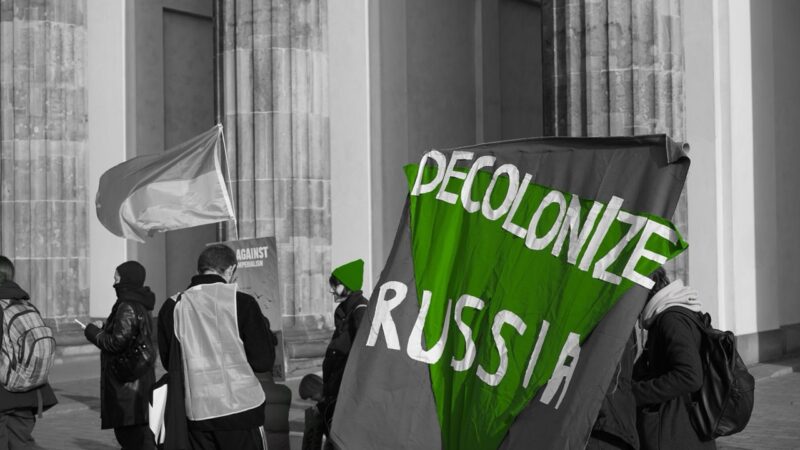
Then there is the ongoing question of internal decolonization. We have seen significant progress in this direction, and we hope to see further progress. Self-perception and self-confidence is another important thread. There is a transition that has occurred from Ukraine as a victim before and at the very beginning of the war to Ukraine as a survivor, but we have to define what comes next. Survivorship is not a sustainable frame of mind; something has to come after that. That identity is emerging now as we work with the trauma we have endured and gain assertiveness in ourselves to move forward and live again.
I believe the arts have something to contribute to every sphere of life. Artists have a role to play in rehabilitation, economic growth, and in the rebuilding and restoration of our cities and towns. I hope that Ukrainian artists will have the opportunities to share their work with foreign audiences. There is a whole world out there, and that is where we belong.
The interview has been edited for length and clarity.